Why Your TV Remote Keeps Landing on Shows You've Already Finished

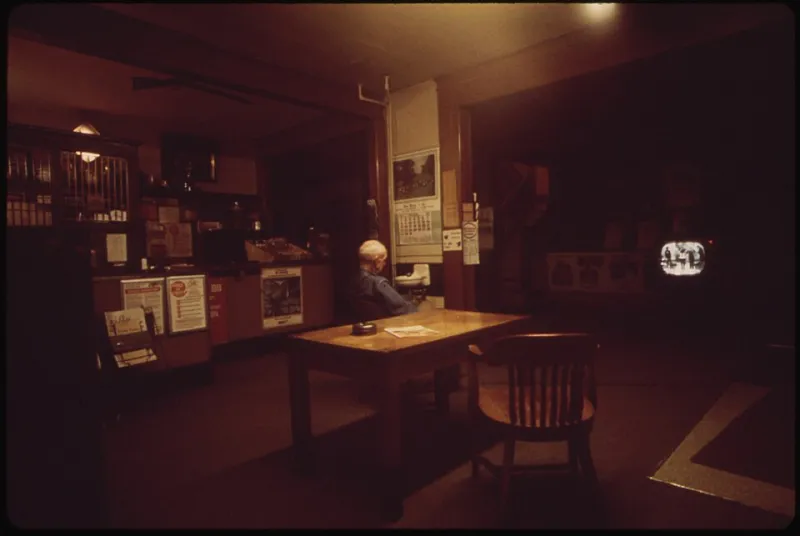
Photo: iMahesh, CC BY-SA 4.0, via Wikimedia Commons
You open your streaming app with every intention of finally starting that critically acclaimed drama everyone's been talking about. Forty-five minutes later, you're back in Dunder Mifflin, watching Michael Scott declare bankruptcy for the sixth time. Sound familiar? You're not alone — and you're definitely not broken.
Across the US, viewers are quietly building what researchers and industry insiders are calling the comfort rewatch economy: a measurable, growing pattern of deliberately choosing content they've already seen over anything new. The numbers are striking. Internal data shared by streaming analysts suggests that on any given evening, somewhere between 25 and 35 percent of viewing hours logged on major platforms are dedicated to titles the viewer has already completed. That's a huge chunk of watch time going to content that, at least on paper, holds no surprises.
So what's actually going on?
The Brain Loves a Spoiler
Here's something counterintuitive: knowing exactly what's going to happen in a show might be exactly why watching it feels so good.
Dr. Pamela Rutledge, a media psychologist who has studied entertainment behavior for over two decades, describes rewatching as a form of "narrative comfort food." When your brain already has the story mapped out, it can relax. There's no cortisol spike waiting for a plot twist, no anxiety about whether your favorite character survives the season finale. The predictability itself becomes the reward.
"We tend to think of suspense as the engine of great storytelling," she's noted in various interviews, "but for a lot of viewers, especially right now, certainty is what they're actually craving."
That craving has a context. Therapists across the country have reported a significant uptick in clients describing low-grade, persistent anxiety — the ambient kind that doesn't always have a specific cause but makes navigating daily decisions feel exhausting. In that headspace, opening a streaming platform and confronting hundreds of new titles isn't exciting. It's one more decision in a day already full of them.
Decision Fatigue Is Real, and Your Queue Knows It
Streaming platforms were designed around abundance. The pitch was always more: more genres, more originals, more international titles, more everything. And for a while, that worked. But abundance has a ceiling.
When researchers study decision fatigue — the mental exhaustion that comes from making too many choices — they consistently find that people default to familiar, low-risk options when their cognitive bandwidth is depleted. That 10 PM version of you, who's already made a few hundred micro-decisions since breakfast, doesn't want to evaluate a new show's premise, read reviews, or risk investing emotionally in something that turns out to be disappointing. That version of you wants Friends. Again.
Streaming data analysts have started flagging this pattern as something platforms genuinely weren't built for. "The recommendation engines are optimized to surface new content," explains one analyst who works with mid-tier streaming services. "They're essentially trying to solve a problem — getting you to watch something new — that a significant portion of viewers aren't actually experiencing. Those viewers already know what they want to watch. They want what they watched before."
This creates an interesting friction. Platforms measure success partly through content discovery — did viewers find new shows? Did original programming land? Rewatches technically count as engagement, but they don't move the needle on those other metrics. Which means the rewatch economy is, in some ways, invisible to the systems designed to serve viewers.
The Emotional Architecture of a Good Rewatch
There's more to this than just avoiding stress. Psychologists who study parasocial relationships — the one-sided emotional bonds we form with fictional characters — point out that returning to a beloved show is, in a meaningful way, like visiting old friends.
The characters don't change. Their arcs are fixed. And for viewers who've been through something difficult — a breakup, a job loss, the general chaos of adult life in 2024 — that stability is genuinely comforting in a way that no algorithm can manufacture on demand.
This explains why rewatching tends to spike during predictable life events. Surveys of viewing behavior consistently show that people reach for comfort content during winter months, after major news cycles, and around significant personal stressors. Shows like The Office, Parks and Recreation, Schitt's Creek, and New Girl have become de facto emotional support programming for a huge swath of American viewers — not because they're the best shows ever made, but because they're reliably warm, low-stakes, and deeply familiar.
"There's a reason we call it comfort food and not comfort cuisine," one therapist noted in a piece on entertainment and mental health. "It doesn't have to be sophisticated. It just has to feel safe."
What This Means for How You Actually Stream
If you're a regular rewatcher, you've probably noticed that the platforms themselves aren't exactly built to support you. Most streaming interfaces push new releases and trending content to the front page. Your "Continue Watching" row is there, but it's rarely prioritized. Finding that show you want to revisit for the third time can feel weirdly difficult, even on a platform that's supposedly learned everything about your taste.
Some services have started experimenting with "rewatch" or "feel good" content categories, essentially acknowledging what the data already shows. But the industry as a whole is still largely oriented around the assumption that viewers want novelty first.
The rewatch economy suggests something different: that for a lot of people, streaming isn't primarily about discovery. It's about access — the ability to have something warm and known available whenever the world feels like too much.
There's No Shame in the Rewatch
If there's a takeaway here, it's that your rewatching habits aren't a failure of ambition or a sign you're not making the most of your subscription. They're a rational response to the psychological reality of being a person in an overwhelming media landscape.
You don't have to justify watching The Great British Bake Off for the fourth time. You don't owe anyone a hot take on the latest prestige drama. Sometimes the most honest thing a streaming service can do for you is get out of the way and let you return to something that already proved it was worth your time.
At Vidoo, we think that's a perfectly valid way to stream. After all — if it moves you, it moves you. Even if it moved you last year, and the year before that.