Same Show, Different You: The Hidden Reason We Keep Going Back to Our Favorite Series

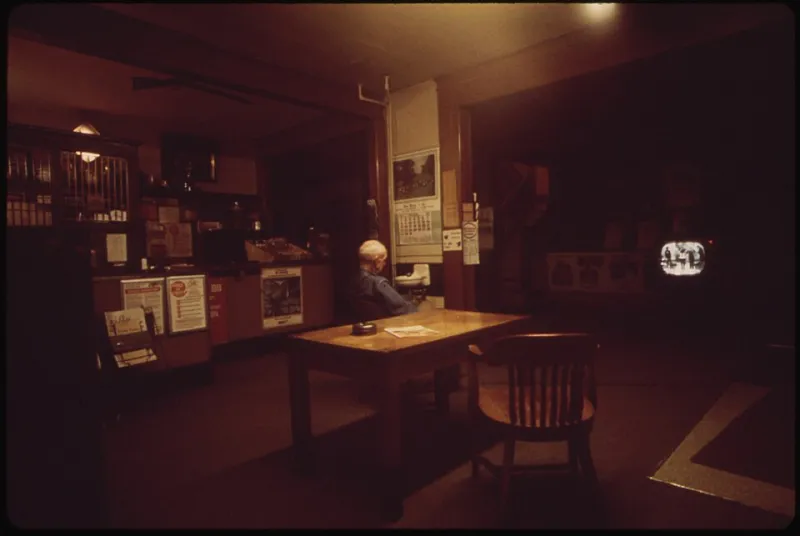
Photo: Daniel Hernández Morillo, Public domain, via Wikimedia Commons
Let's be honest. You've got an ever-growing queue. New releases, algorithmic recommendations, that documentary your coworker won't stop talking about. And yet — here you are, pressing play on The Office for the fourth time. Or maybe it's Schitt's Creek, Breaking Bad, or Gilmore Girls. Whatever your comfort show is, you're not alone, and you're definitely not wasting time.
Comfort rewatching has quietly become one of the defining viewing habits of the 2020s. And the story behind it is way more interesting than "people are just lazy."
The Emotional Economy of the Familiar
Psychologists have a term for what happens when you revisit a beloved show: narrative transportation. But when it's a story you already know, something different kicks in. Instead of the low-grade anxiety of not knowing what happens next, your brain gets to relax into the experience. You're not consuming the show — you're inhabiting it.
Dr. Cristel Antonia Russell, a consumer researcher who has studied media consumption for years, describes this as using familiar narratives as "psychological retreats." During periods of stress — a rough week at work, a global health crisis, just the general chaos of modern American life — returning to a known story gives your nervous system something it genuinely craves: predictability.
Think about the last time you rewatched something. Chances are, something in your life felt a little out of control. That's not a coincidence.
Generational Rewatch Habits Aren't What You'd Expect
Here's where it gets interesting. You might assume that older viewers — Gen X or boomers — are the ones clinging to familiar content while younger audiences chase the new. The data tells a different story.
Gen Z viewers, who grew up with infinite content at their fingertips, are actually among the most devoted rewatchers. Platforms have observed that younger audiences often return to shows from their early teen years with remarkable regularity. For a generation that came of age during a pandemic, those shows — Stranger Things, Brooklyn Nine-Nine, Avatar: The Last Airbender — function almost like memory anchors. They're not just entertainment. They're emotional landmarks.
Millennials, meanwhile, tend to rewatch in a more ritualistic way. A rainy Sunday calls for a specific show. The holiday season demands a particular series. These aren't random choices — they're curated emotional environments, the television equivalent of lighting a candle or making a specific meal.
Older viewers do rewatch, but often with a more reflective motivation. Returning to a show they loved twenty years ago isn't just comfort — it's a way of checking in with a past version of themselves. Same episode, different life stage. It hits differently every time.
What Streaming Platforms Know (And Aren't Saying)
Here's the awkward truth for the streaming industry: rewatch behavior directly contradicts how most platforms are designed to work.
Every major streaming service has poured enormous resources into discovery — the recommendation engines, the "Because you watched" rows, the personalized homepages. The implicit assumption is that a happy viewer is always a viewer moving forward, discovering new content, expanding their consumption. More titles watched equals more value delivered.
But internally, platforms have access to repeat viewership data that tells a more complicated story. Certain shows accumulate rewatch numbers that dwarf their original premiere audiences over time. A series might have launched to modest fanfare but racked up millions of repeat streams over the following three years. That's not failure — that's a content asset that keeps paying off.
The challenge is that the business model for most streaming services is built around subscriber retention through novelty. New originals, new seasons, new buzz. A subscriber who only rewatches Friends doesn't generate the kind of cultural conversation that drives new sign-ups. So platforms find themselves in a quiet tension: their algorithms push discovery, but their most loyal users keep going back to the same ten shows.
Some platforms have started leaning into this. Curated "comfort" collections, mood-based browsing categories, and "Pick Up Where You Left Off" features are all quiet acknowledgments that rewatching is a legitimate — and valuable — viewing behavior.
The Rewatch as Self-Care
There's a broader cultural shift happening here that goes beyond just television habits. Americans are increasingly vocal about prioritizing mental wellness, and the ways we consume media are part of that conversation. The idea that you should always be consuming something new, something challenging, something that expands your horizons — that pressure is starting to ease.
Streaming a familiar show isn't the same as avoiding growth. Sometimes it's the opposite. Coming back to a story you know well can feel like visiting a trusted friend. You're not there for new information. You're there for the feeling.
At Vidoo, we talk a lot about streaming what moves you — and sometimes what moves you is the thing that's been moving you for years. There's no shame in that queue.
Why the Same Show Hits Differently Every Time
One of the genuinely fascinating aspects of comfort rewatching is that it's rarely identical to the first watch. You notice different things. A line that meant nothing at 22 lands hard at 32. A character's arc feels more tragic, or more hopeful, depending on where you are in your own life.
This is part of why people keep returning. The show isn't changing — but you are. In a weird way, rewatching is actually one of the more self-aware things a viewer can do. You're not just passively consuming a story. You're using it as a kind of mirror.
So the next time someone side-eyes you for rewatching The West Wing instead of catching up on the latest prestige drama everyone's talking about, you can tell them you're engaged in a sophisticated act of psychological self-regulation.
Or you can just tell them to mind their business and let you watch your show in peace. Either way.