Too Much to Watch, Nothing to Play: The Science Behind Your Streaming Freeze

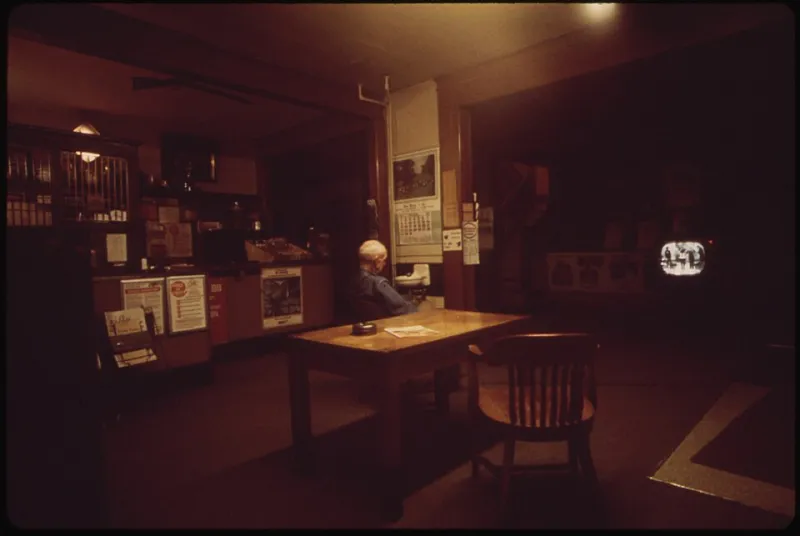
Photo: Erik Pevernagie, CC BY-SA 3.0, via Wikimedia Commons
You've been there. It's Friday night, the couch is calling, and you've got access to more content than a human being could watch in three lifetimes. You open your streaming app. You scroll. You hover. You read a synopsis, abandon it, scroll some more. Twenty minutes later, you're watching a YouTube video you've already seen twice, or worse — you've just given up entirely and gone to scroll Instagram instead.
This isn't a personal failure. It's a documented psychological phenomenon, and the streaming industry has quietly known about it for years.
Barry Schwartz Predicted All of This
Back in 2004, psychologist Barry Schwartz published The Paradox of Choice, a book that argued — controversially at the time — that more options don't make us happier. They make us more anxious, more indecisive, and ultimately less satisfied with whatever we do choose. He wasn't talking about streaming. Netflix was still mailing DVDs. But he might as well have been writing the playbook for exactly what happens when someone opens a platform with 10,000 titles and zero direction.
The core idea is simple: when the number of options crosses a certain threshold, our brains shift from excitement to threat response. We stop asking "what sounds fun?" and start asking "what if I pick wrong?" The fear of missing out on something better — something more perfectly calibrated to this exact mood, this exact evening — becomes paralyzing.
"Choice overload is especially brutal in entertainment contexts because the stakes feel personal," says Dr. Amanda Chen, a consumer behavior researcher who has studied digital media habits at the University of Michigan. "Your viewing choices feel like a reflection of who you are. People aren't just picking a show — they're picking an identity for the next two hours. That pressure is enormous."
The Scroll Is the Product
Here's something that might reframe how you think about your streaming apps: the browse experience itself is designed to keep you engaged, even when — especially when — you're not watching anything.
Streaming platforms measure something called "engagement minutes," and that metric includes time spent browsing. Every hover, every trailer autoplay, every time you open the app and don't immediately close it — that's data being collected and counted. From a pure retention standpoint, a user who scrolls for thirty minutes and watches nothing has still "engaged" with the platform.
This doesn't mean there's some villain in a Silicon Valley office cackling about your paralysis. But it does mean the incentive structure hasn't historically pushed platforms to solve the problem. The infinite scroll, the autoplay trailers, the algorithmically shuffled rows — all of it is optimized for maximum time-in-app, not maximum viewing satisfaction.
Some platforms are starting to course-correct. Features like "Play Something" (a randomized content launcher) have appeared on a handful of services, essentially admitting that their own content libraries are too overwhelming for human navigation.
Why the Algorithm Isn't Saving You
You'd think recommendation engines would fix all this. After all, if the platform knows you binged three Nordic crime dramas in a row and gave five stars to a documentary about deep-sea fish, shouldn't it be able to serve you something you'll love?
Sometimes, yes. But recommendation systems have a paradox of their own: they tend to narrow your options down to a cluster of "safe" choices — things highly similar to what you've already watched. This creates a feedback loop where your recommendations get increasingly specific and, ironically, increasingly boring. You've already seen the things most like those things. The algorithm can't easily account for the fact that tonight you're in a completely different headspace than you were last Tuesday.
"Mood is incredibly difficult to model algorithmically," explains Dr. Chen. "Your data history represents who you were. It doesn't always know who you are right now, at 9pm on a Thursday after a rough week."
Real Strategies That Actually Help
So what do you do? The good news is that decision paralysis is a solvable problem, and solving it doesn't require a psychology degree.
Set a two-minute rule. Give yourself exactly two minutes to browse. If you haven't committed to something by then, you pick from whatever's currently on your "continue watching" list or a pre-made shortlist. The timer removes the illusion that more scrolling will yield a better answer — it rarely does.
Make a watchlist and actually trust it. When you're not in a viewing session — say, during lunch or a commute — add things to a watchlist without pressure. Then when Friday night arrives, browse your own curated list instead of the full library. You've already done the vetting.
Watch with a social constraint. Telling a friend "I'm starting this show tonight" creates a low-stakes accountability structure. You're less likely to bail on a choice when someone else is invested in your experience, even loosely.
Reframe the stakes. Remind yourself that watching a show you end up not loving isn't a loss. It's data. You learn something about your taste, and you can turn it off. Forty minutes isn't a sunk cost — it's a sample.
Use Vidoo's mood-based discovery tools. Platforms that let you filter by feeling rather than genre can shortcut the whole paralysis cycle. Starting with "I want something funny but not stupid" is a much more useful input than staring at a genre menu that lumps together everything from Seinfeld to Jackass.
The Bigger Picture
There's something almost poetic about the streaming era's central irony: the more content we've been given, the harder it's become to actually watch any of it. We built the most abundant entertainment ecosystem in human history, and a significant portion of us respond to it by watching nothing.
But awareness is the first step. Once you recognize that your scroll-and-stall is a predictable psychological response rather than some personal quirk, you can start to work around it. The content is there. The mood is there. The couch is definitely there.
Sometimes the most radical act is just hitting play.